
Let’s Listen
Listen
Attachment Theory: Theory of Mind in Therapy – Why Clients Struggle to Understand Other Minds
Attachment Theory of Mind in Therapy
Understanding Attachment Styles, Mentalisation & Relationships
How do attachment relationships shape the development of theory of mind?
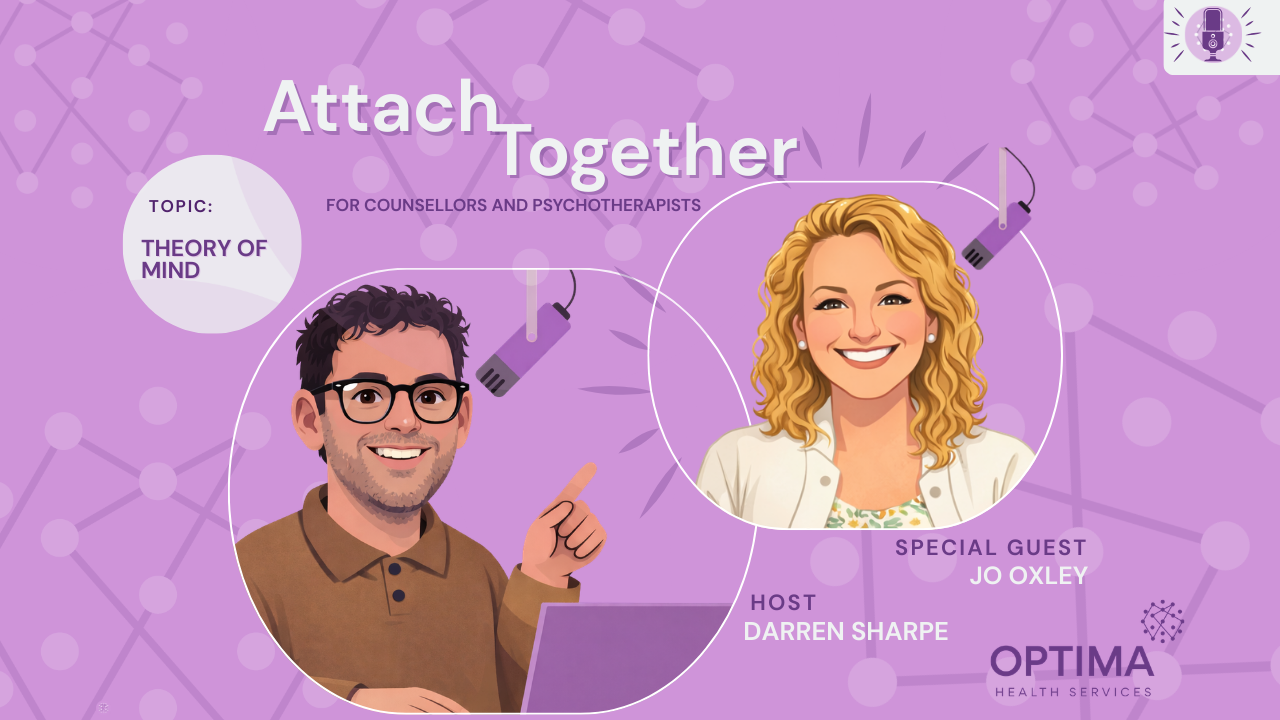
In this episode of Attach Together — an attachment theory podcast for therapists, Darren and Jo Oxley explore the relationship between attachment theory, theory of mind, emotional regulation and relational development.
Theory of mind — sometimes called mentalisation — is the ability to understand that other people have their own thoughts, feelings, beliefs and intentions.
Through an attachment lens, this capacity develops within secure caregiving relationships. When caregivers respond sensitively and reflectively, children begin to understand both their own mind and the minds of others.
But when early attachment experiences are marked by anxiety, disconnection or emotional overwhelm, this developmental process can be interrupted.
For therapists working with attachment styles and relational patterns, understanding theory of mind provides powerful insight into:
-
emotional regulation
-
relational misunderstandings
-
perspective taking
-
therapeutic stuckness
This conversation also explores how therapists can help clients develop theory of mind within the therapeutic relationship.
Jo shares practical clinical insights including Daniel Siegel’s hand-brain model, ways to bring the prefrontal cortex back online, and how calming the nervous system allows clients to think about minds more reflectively.
The episode finishes with a clinical dilemma many therapists will recognise:
The client who is always late.
Through an attachment-informed perspective, the discussion explores how lateness might relate to:
-
avoidance strategies
-
anxiety about emotional closeness
-
practical life pressures
-
therapeutic pacing and safety
Key Takeaways for Therapists
• Attachment theory provides the soil in which theory of mind develops
• Secure caregiving supports the ability to understand other minds
• Anxiety can take the thinking brain offline
• Regulation helps restore reflective capacity
• Therapy can help clients develop mentalisation later in life
• Slowing the therapeutic pace can support relational safety
Chapters (YouTube)
00:00 Introduction to the Attach Together Podcast
01:40 What Is Theory of Mind in Attachment Theory?
04:00 How Children Develop Theory of Mind
06:10 The Famous Smarties Experiment Explained
08:20 Attachment Security & Mentalisation
10:45 The Hand Brain Model (Daniel Siegel)
13:20 Anxiety, Cortisol & the Thinking Brain
15:00 Regulation Techniques for Clients
17:00 Using Theory of Mind in Therapy
21:40 Therapist Dilemma — The Client Who Is Always Late
24:00 Avoidant Attachment & Therapy Engagement
26:00 Final Takeaway for Therapists
About the Guest
Jo Oxley is an experienced psychotherapist, counsellor, supervisor and tutor with over 35 years of teaching experience. She trained directly with Linda Cundy and founded Optima’s Level 5 and Level 7 Diplomas in Attachment-Based Psychotherapy.
Resources Mentioned
• Daniel Siegel — Hand Brain Model
• Simon Baron-Cohen — Theory of Mind Research
CPD Reflection Pack
This episode can be used for Continuing Professional Development (CPD).
You can download the accompanying reflection resource here:
If You Found This Helpful
If this attachment theory podcast supports your work with attachment styles and relationships, please consider:
• Following the podcast
• Sharing with colleagues
• Using the reflection pack for supervision or CPD