
Let’s Listen
Listen
Attachment Defences in Therapy: Understanding Protective Patterns in Clients
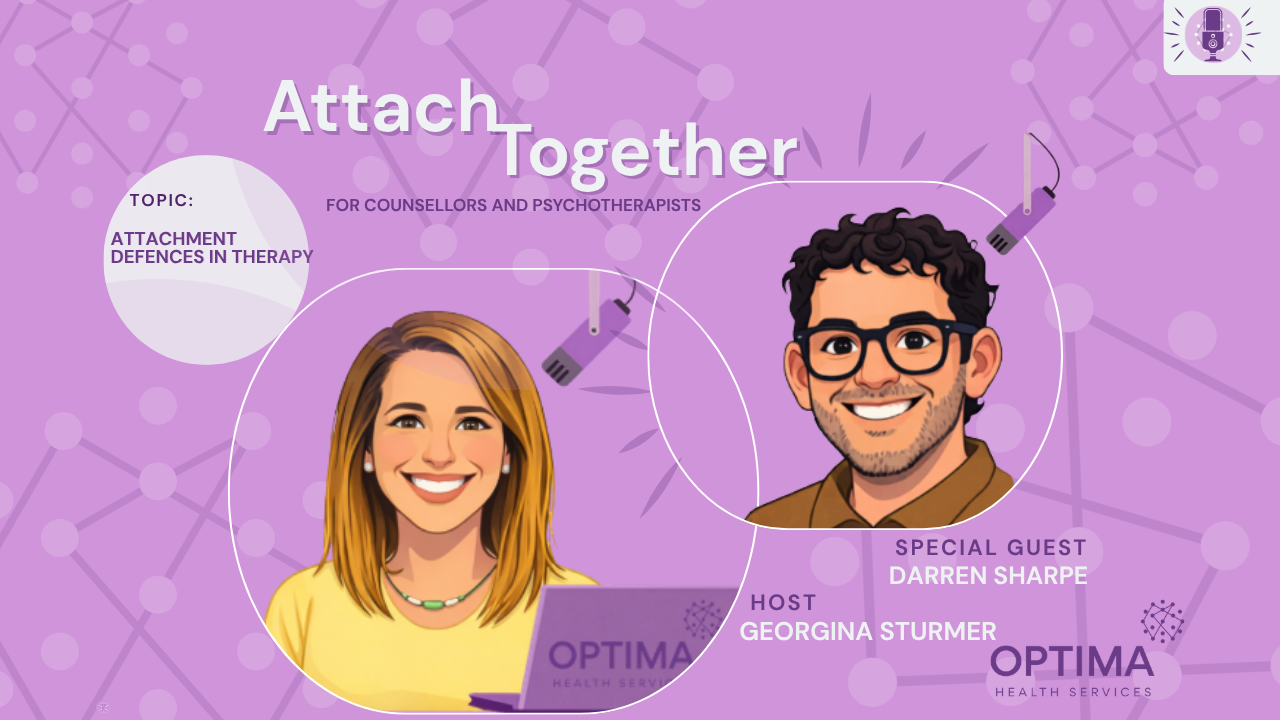
Attachment defences in therapy are protective patterns clients use when they feel relationally threatened, emotionally exposed, or unsafe in connection. In this final episode of Season One of Attach Together, Georgina and Darren return to the foundations of attachment theory, attachment styles, relationships and therapy to explore how defences show up in the counselling room – and how therapists can respond with patience, curiosity and clinical care.
This episode is especially relevant for counsellors, psychotherapists, psychologists and therapy trainees who want to deepen their attachment-informed practice. Rather than viewing defences as resistance or pathology, Darren invites us to understand them as normal human strategies for safety, shaped by early relational experience.
Attachment defences in therapy are not signs that a client is difficult or unwilling. They are often the client’s best attempt to stay safe.
🔎 You’ll Learn
- The difference between attachment traits and attachment defences
- How avoidant and preoccupied attachment patterns intensify under pressure
- Why clients may withdraw, escalate, intellectualise or seek reassurance
- How therapists can avoid colluding with defensive strategies
- The role of mentalisation, countertransference and pacing
- How PACE – patience/playfulness, acceptance, curiosity and empathy – can support attachment-informed therapy
- What to consider when meeting clients, former clients or your own therapist in professional spaces
Common Questions
What are attachment defences in therapy?
Attachment defences in therapy are protective strategies clients use when they feel unsafe, vulnerable or relationally exposed. They often develop from earlier experiences where closeness, need, conflict or emotional expression felt risky.
How do attachment defences affect relationships?
Attachment defences shape how people manage conflict, closeness and vulnerability. Some people withdraw to feel safe, while others intensify bids for connection, reassurance or validation.
How do attachment defences appear in counselling?
In counselling, defences may appear when a client feels emotionally close, challenged, misunderstood or exposed. They may become cognitive, shut down, seek reassurance, argue their position, change the subject or test whether the therapist will remain steady.
How should therapists respond?
Therapists can slow the pace, stay curious, avoid shame and notice what the defence is protecting. The task is not to dismantle the defence too quickly, but to build enough relational safety for exploration.
🕑 Chapters
00:00 Introduction to Attach Together
00:16 Welcome and episode context
01:28 Why focus on attachment defences?
02:32 What is attachment?
03:05 Attachment traits versus defences
05:02 Defences under pressure
08:17 Defences as safety strategies
10:04 Using attachment defences in practice
10:44 Avoiding collusion
12:10 Working with avoidant defences
13:17 Countertransference and therapist responses
15:43 Pace, PACE and attachment-informed work
17:47 Understanding our own patterns
18:00 Normalising attachment defences
20:35 Dilemma: seeing clients out of context
21:08 Contracting and professional boundaries
24:55 Re-contracting at endings
25:07 Optima retreat update
26:30 Season One closing reflections
FREE CPD Certificate & Reflection Pack
You can download the FREE CPD Certificate for this episode via our website www.optimahealthservices.co.uk and join our listener list to receive the Reflection Pack for future episodes.