Similar Posts
Attachment Night Vision: Seeing Beneath the Surface in Psychotherapy
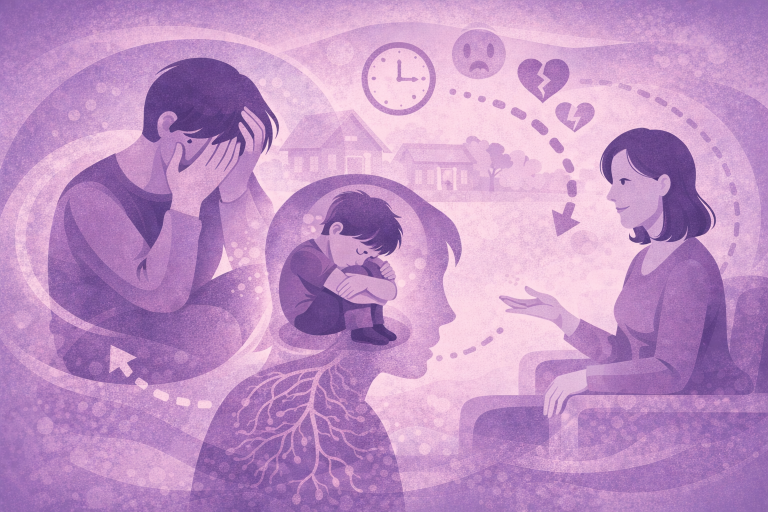
Therapists don’t just listen to stories—they read bodies. This article explores how attachment theory and somatic awareness can give clinicians “night vision” to detect what’s unspoken: the nervous system responses shaped by trauma and care. Learn to work with the body as a storyteller in relational healing
What We Miss When We Stay in the Here and Now
(Why Developmental Thinking Changes Everything) There’s a quiet assumption woven into much therapeutic work:that if we stay present-focused enough, insight and change will follow. For many clients, this is true. But for others – often those with early relational trauma – something essential gets missed when therapy remains anchored only in the present. These are…
Decoding Attachment: The Surprising Ways Early Experiences Shape Our Stress Response
Decoding Attachment: The Surprising Ways Early Experiences Shape Our Stress Response As counsellors and psychotherapists, we witness firsthand how early attachment experiences leave lasting imprints on the mind and body. But what if we told our clients that these early relationships literally shape their brain’s wiring—especially when it comes to stress? Understanding the neuroscience of…
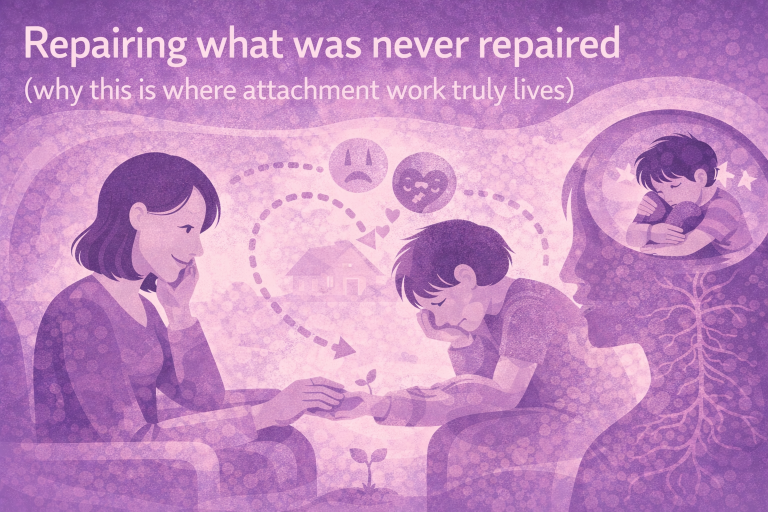
Repairing What Was Never Repaired
(Why This Is Where Attachment Work Truly Lives) There’s a common misconception in therapy that change happens in moments of insight. A realisation lands.A pattern makes sense.A link to childhood becomes clear. These moments matter – but in attachment-informed work, they’re rarely where the deepest healing occurs. That happens somewhere else entirely. It happens in…
Detecting Hidden Attachment Patterns
Detecting and Unlocking Hidden Attachment Patterns In the ever-evolving landscape of mental health and psychotherapy, attachment-based psychotherapeutic counselling is emerging as a transformative approach to healing relational wounds and fostering emotional resilience. By detecting hidden patterns of insecure attachment through observable client behaviours and neurobiological cues, we gain profound insights into how past experiences shape…
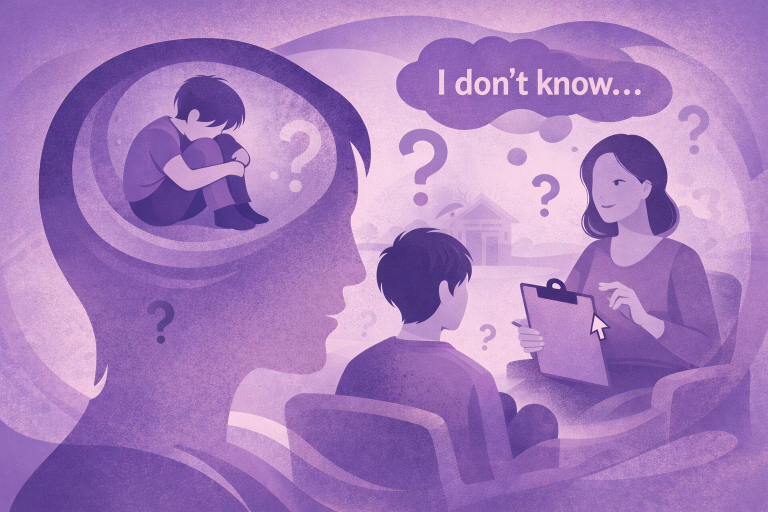
When Clients Say “I Don’t Know”
(And Why That’s Not Resistance) There are few phrases that can quietly derail a therapy session like this one: “I don’t know.” And often, something happens inside the therapist. We might feel momentarily stuck.We might try another angle.We might gently probe, rephrase, offer options. Or – if we’re honest – we might wonder whether the…