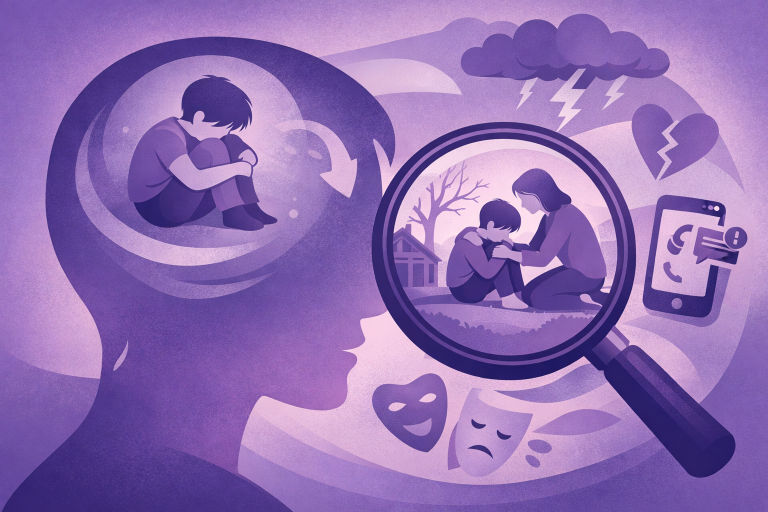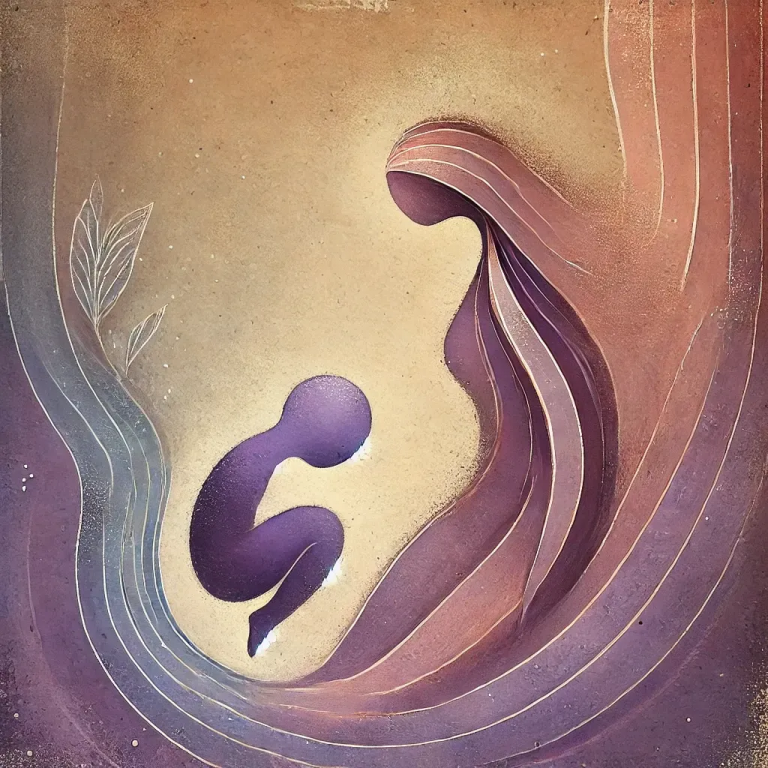
If you’ve ever sat with a client and quietly thought, “Ah… this is an old dance they’ve been doing since childhood,” then you’re already brushing up against one of the most elegant and compassionate models in the attachment world: the Circle of Security.
Whether you’re a parent, a therapist, a supervisor, or simply a human who has tried very hard to have relationships without losing your mind, the Circle offers something reassuringly simple and profoundly wise.
And – if you’re curious about deepening your attachment-based work – this is also one of the core ideas we explore on the CPCAB Level 5 Attachment Psychotherapeutic Counselling Diploma, with an early-bird offer running until the end of January 2027 (because who doesn’t love a gentle nudge and a bargain?).
But today, let’s focus on the Circle itself – where it came from, why it matters, and how it can transform both parenting and therapeutic practice.
So… what exactly is the Circle of Security?
Imagine a child standing at the edge of the garden, deciding whether to run off and explore the world, or come back in for a cuddle and a biscuit. That movement – outwards and back again – is the essence of the Circle.
The model was created by Glen Cooper, Kent Hoffman and Bert Powell, who distilled decades of attachment research (hello, Bowlby, Ainsworth, Main, Waters and the whole gang) into something beautifully accessible. Rather than long paragraphs of theory, we get a simple visual map of what children need—both when they’re venturing out, and when they’re coming in again for comfort.
At its heart, the Circle communicates two truths:
- We are wired for exploration. (Even if our “exploring” sometimes looks like scrolling Instagram or emotionally legging it from our therapist’s latest question.)
- We are wired for connection. (Even if we’ve spent years pretending we’re absolutely fine, thank you very much.)
The Circle of Security shows that healthy development requires both a Secure Base (support to go out into the world) and a Safe Haven (a reliable place to return when things get overwhelming).
And crucially, the caregiver’s job—much like the therapist’s job—is to “be bigger, stronger, wiser and kind.”
Not perfect. Not superhuman. Not endlessly patient or Zen. Just attentive enough to tune in, hold, guide, and reconnect.
Which is, frankly, a relief.
Parenting Through an Attachment Lens: It’s Not About Perfection
Parents are often haunted by a secret fear: “I’m messing it all up.”
The Circle of Security stands there like a warm cup of tea saying, “Nonsense. Good enough is good enough.”
Children don’t need flawless parents. They need caregivers who:
- Notice what they’re trying to do (explore or connect)
- “Get” their inner experience well enough to respond sensitively
- Repair ruptures when things go a bit pear-shaped (which they will… daily)
The magic of the Circle is its compassion for both the parent and the child. Because if we’re honest, most adults are also moving around their own circles. Sometimes we’re bold and out there, proving our independence. Sometimes we’re sheepishly retreating, craving reassurance but not wanting to look needy.
Sound familiar?
The Circle normalises this. It shows that the need for comfort, co-regulation, and emotional holding isn’t childish—it’s human.
And that brings us to the therapy room.
What Parenting Can Teach Us About Therapy
Here’s the funny thing: the more therapists learn about child development, the more they recognise the emotional choreography of adulthood.
Clients come with sophisticated language, complex histories, job titles, and mortgages, but underneath the surface they have the same fundamental needs:
- “Can you support me while I explore this difficult part of myself?”
- “Can you welcome me back when it’s all too much?”
- “Can you hold onto me even when I’m pushing you away?”
- “Can you stay steady even when I wobble?”
This is why the Circle of Security is so relevant to counselling training—it gives therapists a simple, relational map for attuning to clients’ attachment needs, moment to moment.
We might hear it in subtle ways:
- A client who intellectualises everything may be protecting the top of the circle: the exploring side.
- A client who clings, panics, or catastrophises may be showing us their difficulty trusting the safe haven side.
- A client who seems flat, numb, or endlessly “fine” might be avoiding the circle altogether because life taught them that needs were unwelcome or ignored.
The Circle allows us to gently wonder:
“Where is my client on the circle right now?”
“What need are they trying to communicate?”
“How can I respond in a way that helps them feel safer, seen, and understood?”
It’s attachment-informed therapy in its simplest, most elegant form.
Why Therapists Need a Map (Even Experienced Ones)
Even seasoned counsellors have moments where a client leaves us feeling baffled, bruised, or slightly guilty that we offered an intervention which landed like a lead balloon.
Understanding the Circle of Security helps therapists:
- decode relational patterns
- respond to attachment signals with deeper wisdom
- hold boundaries with kindness rather than rigidity
- repair ruptures with confidence instead of self-blame
- support exploration without abandoning or overwhelming
- offer comfort without rescuing or over-functioning
In other words, it helps us step into that beautiful mantra:
“Be bigger, stronger, wiser, and kind.”
Not controlling.
Not passive.
Just grounded enough to offer something stabilising and transformative.
And students who train in attachment-based counselling often say they also learn an enormous amount about their own patterns—why certain clients evoke discomfort, protectiveness, frustration or tenderness. The Circle helps make sense of it all.
The Circle of Security and the Level 5 Diploma: A Perfect Partnership
The CPCAB Level 5 Diploma in Attachment Psychotherapeutic Counselling is built around models that bring relational work to life, and the Circle of Security is one of the foundational pieces we draw upon.
Throughout the course, students learn to:
- understand attachment needs at a deep, embodied level
- work competently with the client’s internal working models
- recognise their own attachment responses as practitioners
- use the ARCC model (Awareness, Regulation, Challenge, Corrective Experience) to support movement around the circle
- integrate somatic, relational, and developmental theory
- apply attachment principles ethically and sensitively in practice
It’s rich, experiential learning that deepens not just your clinical work, but also your capacity for compassion—in the therapy room and in everyday life.
The course is designed for counsellors who want to feel more resourced, more confident, and more equipped to work at relational depth. The kind of work that doesn’t just “help people cope,” but supports real transformation.
And because the world desperately needs more attachment-informed practitioners, we’re offering an early-bird discount on enrolment until 31st January 2027.
Consider it our own version of being “bigger, stronger, wiser and kind”—with a small saving thrown in for good measure.
Why Learning Attachment Theory Isn’t Just Professional Development… It’s Personal Growth
Here’s a little secret: attachment theory has a habit of sneaking into your everyday life.
Students often report:
- suddenly understanding their partner’s behaviour
- recognising why certain friendships feel so deeply comforting
- seeing their own childhood patterns with new gentleness
- responding to their children or grandchildren with more sensitivity
- feeling more grounded in moments of conflict
- having more compassion for the parts of themselves that once felt “too much” or “not enough”
Attachment training helps therapists not just work differently, but live differently.
The Circle of Security embodies that beautifully. It’s a reminder that:
- That’s what makes attachment-based counselling so
- We don’t have to be perfect to be effective.
- We can repair when we rupture.
- We can offer safety even when we feel wobbly.
- We can grow at any age.
- And, ultimately, connection is what heals.
powerful—and why the Level 5 course often becomes a turning point in a practitioner’s career.
In a Nutshell: The Circle Helps Us Love Better, Hold Better, and Heal Better
So whether you’re a parent trying to navigate toddler tantrums, a therapist holding a client through heartbreak, or a student ready to deepen your clinical work, the Circle of Security offers a steadying hand.
It teaches us how to:
- support exploration
- welcome vulnerability
- honour emotional needs
- strengthen resilience
- build secure relationships
- and meet people (including ourselves) with tenderness and curiosity
And if this resonates with you—if something in you thinks, “Yes, I want to understand this more deeply; I want to work at this level,” then the Level 5 Diploma might be the next right step.
With the early bird offer open until January 2027, there’s a lovely window to join us at a reduced rate.
But more importantly, there’s an invitation to join a community that cares deeply about relational healing—starting with ourselves, and rippling outwards to every person we work with.