Similar Posts
Music as an Attachment Figure
Can music be more than just background noise? For many, it becomes a lifeline—an emotional surrogate offering containment, regulation, and a sense of presence. This post explores how music can act as a secure base in the absence of safe attachment figures, grounded in both personal experience and therapeutic insight
Isn’t attachment just about relationships?
Attachment isn’t just about relationships—it shapes how we regulate stress and emotions. This article explores how early relational experiences wire our nervous system and why co-regulation in therapy is key to healing affect dysregulation
This is just how I’ve always reacted
It’s a common phrase in therapy—but it’s not the truth. Stress responses aren’t fixed traits. They’re learned patterns shaped by early attachment—and they can be rewired through relational healing
New Year Resolutions – Old Patterns: The Challenge of Change Through an Attachment Lens
By a therapist with a soft spot for attachment theory and a healthy scepticism about January makeovers Every January we are invited—no, instructed—to reinvent ourselves. New bodies. New habits. New lives. It’s a seductive promise, usually delivered alongside a discounted gym membership and a faint sense of personal failure. But from an attachment perspective, most…
The Truth About Avoidant Attachment: Why Distance Doesn’t Mean Disinterest
The Truth About Avoidant Attachment: Why Distance Doesn’t Mean Disinterest One of the most common misconceptions about avoidantly attached individuals is that they are emotionally detached and uninterested in connection. This assumption can lead to frustration, misunderstandings, and even a communication breakdown. We see this frequently in couples therapy. The Myth: Avoidant Clients Are Emotionally…
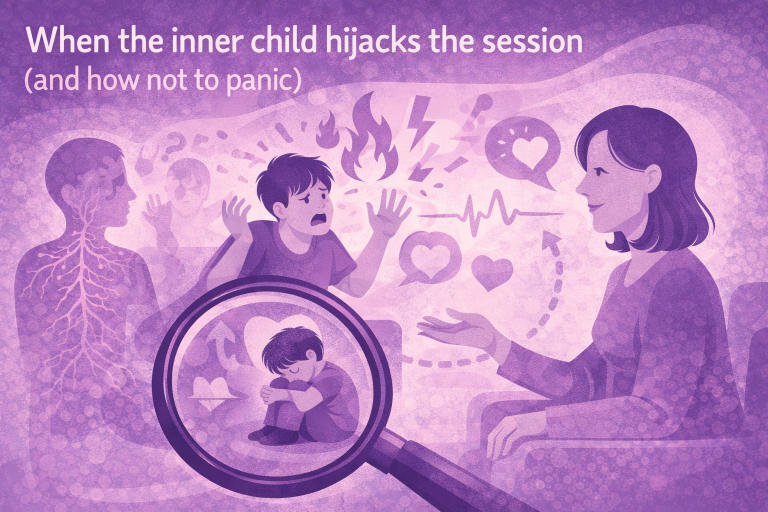
When the Inner Child Hijacks the Session
(And How Not to Panic) There are moments in therapy when something shifts suddenly. A client who was reflective becomes overwhelmed. Tears escalate quickly.Words disappear.The room feels tighter, louder, more urgent. And inside the therapist, a familiar response can arise: I’ve lost them.This is too much.I need to do something – now. This is often…