
Buy & Download
Buy & Download
Attachment-Informed Supervision: The Functional Model Revisited
£9.99
Duration:
1 hour with reflection
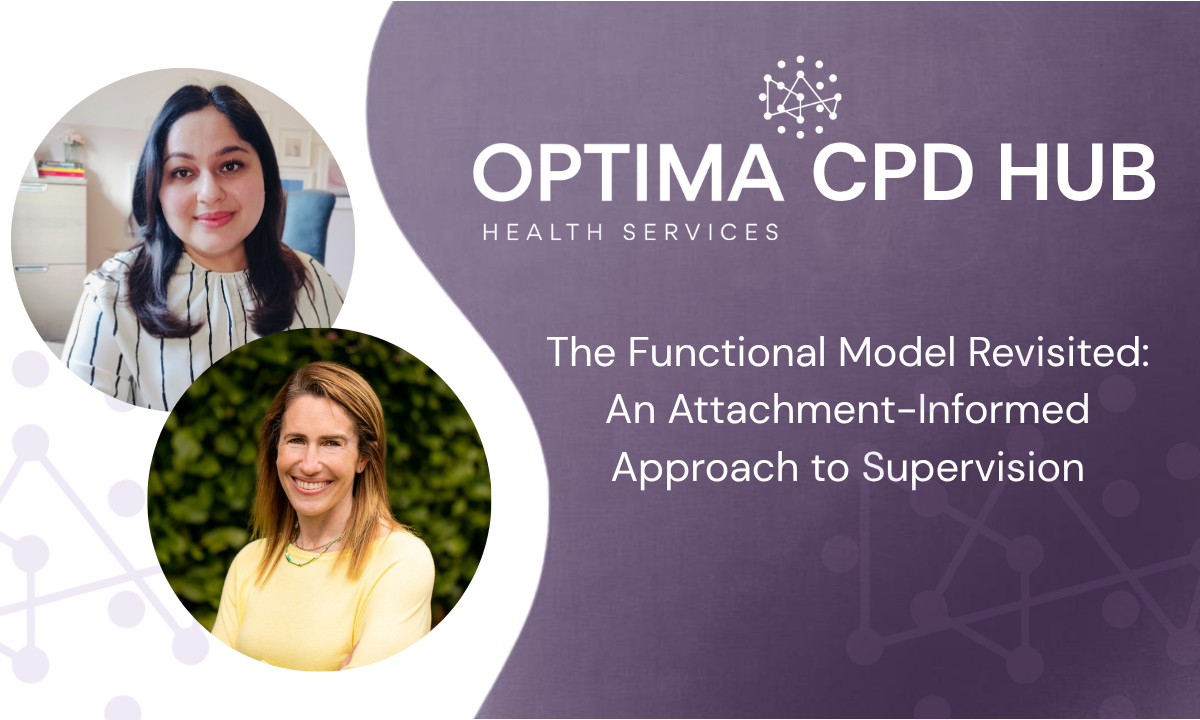
The Functional Model Revisited: An Attachment-Informed Approach to Supervision
Tutors: Uruj Anjum and Georgina Sturmer
In this workshop, Uruj Anjum and Georgina Sturmer revisit the Functional Model of supervision and explore what happens when it is viewed through an attachment-informed lens.
The session begins with the three functions of supervision developed by Francesca Inskipp and Brigid Proctor: formative, normative and restorative. Uruj and Georgina explain these as the learning and development function, the ethical and accountability function, and the emotional support and containment function. Rather than treating these as three tidy columns, they explore how the functions often overlap within real supervision sessions.
A key focus of the workshop is the idea that supervision does not land in neutral space. It lands in people, with histories, identities, relationships to authority, and different levels of comfort with being seen, challenged or supported. The tutors explore how supervision can feel stretching, exposing, collaborative, comforting or frustrating – sometimes all at once.
The workshop then brings in attachment theory, considering supervision as both a secure base and a safe haven. Uruj and Georgina look at how supervisees may lean towards different functions depending on their attachment strategies. Avoidant tendencies may lead supervisees to stay in intellectual, formative or normative spaces, while anxious tendencies may seek reassurance through the restorative function. Supervisors also bring their own attachment patterns, which can shape whether they over-support, avoid challenge, move too quickly into teaching, or struggle with restorative work.
The session also explores power, culture and identity in supervision. Uruj and Georgina invite supervisors and supervisees to think not only about difference, but about how power operates in the room: whose voice is centred, whose knowledge is valued, and how accountability can be offered without shame.
Through role plays, and reflection, the workshop brings the model to life with examples of anxious and avoidant patterns in supervision. The emphasis is on using the Functional Model as a structure, while also noticing safety, threat, power and the nervous systems in the room.
Key clinical themes
- The Functional Model of supervision: formative, normative and restorative
- How the three functions overlap in real supervision
- Supervision as more than a case presentation
- Supervision as a secure base and safe haven
- How attachment patterns shape the experience of supervision
- Avoidant strategies: intellectualising, minimising and staying in thinking
- Anxious strategies: reassurance-seeking, self-doubt and fear of getting it wrong
- How supervisors’ own attachment patterns affect the work
- The role of power, culture and identity in supervision
- Accountability without shame
- Difference, hierarchy and the impact of being seen
- Using attunement to move safely between the three functions
This recording is suitable for supervisors, supervisees and therapists who want to think more deeply about supervision as a relational, ethical and attachment-informed space.
PLEASE NOTE: The time of the recording has been adapted from a live session and includes time for reflection!