(Why Safety Can Feel Like a Threat)
There’s a moment in therapy that can quietly unsettle even experienced counsellors.
The work has been steady.
The client feels more regulated.
Sessions are calmer.
There’s less crisis, less urgency.
And then – something shifts.
The client becomes anxious again.
They create conflict.
They miss a session.
They suddenly question the therapy itself.
It can feel baffling.
Things were going well – what happened?
From an attachment and nervous-system perspective, this moment often makes perfect sense.
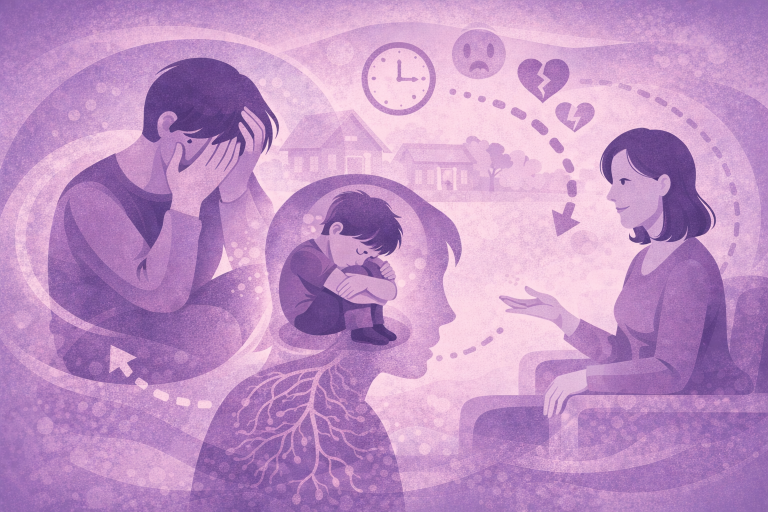
Because for some clients, calm is not experienced as safe.
When chaos is familiar – and calm is not
Nervous systems are shaped by repetition, not logic.
For clients who grew up in environments marked by unpredictability, emotional intensity, or relational instability, chaos was familiar. It was organised. It made sense.
Calm, on the other hand, may have been rare – or even dangerous.
Calm might have meant:
- Emotional withdrawal
- The calm before an explosion
- Being left alone
- Needs going unnoticed
So when therapy begins to feel steadier, quieter, more contained, the nervous system may interpret this not as safety, but as threat.
Not consciously.
Somatically.
Why improvement can activate anxiety
When a client moves out of survival mode, something unexpected happens.
There is space.
And in that space, things that were previously held at bay can begin to surface:
- Grief
- Longing
- Loss
- Awareness of unmet needs
For nervous systems organised around vigilance, this can feel overwhelming.
Chaos keeps things moving.
Calm allows things to be felt.
So the nervous system does what it knows how to do best.
It creates disruption.
“Self-sabotage” through a different lens
Clients are often described – or describe themselves – as self-sabotaging when things start to improve.
But from a nervous-system perspective, this is rarely about destruction.
It’s about regulation.
Returning to familiar intensity can paradoxically feel safer than staying with unfamiliar calm.
The nervous system is not asking:
Is this good for me?
It’s asking:
Is this familiar? Do I know how to survive here?
What happens in the therapist
These moments often stir strong reactions in therapists.
We may feel:
- Disappointed
- Confused
- Frustrated
- Worried we’ve missed something
There can be a subtle sense of personal failure:
I thought we were making progress.
Attachment-informed work invites a different understanding.
This is not a setback.
It’s a threshold.
The client is approaching unfamiliar territory – and the nervous system is protesting.
Staying steady when calm becomes uncomfortable
When calm triggers anxiety, therapists can feel pulled to respond in one of two ways:
- Push forward – encouraging insight, progress, stability
- Retreat – backing off, becoming cautious, reducing depth
Both responses are understandable.
But often, what helps most is naming the experience gently, without pathologising it.
Something like:
- “I notice things felt steadier – and then something shifted.”
- “Sometimes when things calm down, it can feel unsettling.”
- “We don’t have to rush past this.”
These moments help the nervous system begin to link calm with connection rather than loss.
Calm as a new experience
For clients who fear calm, safety has to be learned gradually.
Through:
- Predictable sessions
- A therapist who doesn’t disappear when intensity drops
- Steadiness without pressure
- Calm that stays present rather than withdrawing
Over time, the nervous system begins to update its expectations.
Calm no longer signals danger.
Stillness no longer means abandonment.
But this learning cannot be rushed.
A different way of understanding progress
In attachment-focused work, progress is not always linear.
Moments of disruption after calm are often signs that:
- The work is touching something real
- Old strategies are loosening
- The nervous system is encountering unfamiliar safety
Seen this way, these moments are not failures.
They are invitations to slow down and stay present.
A reflection to carry into your work
You might gently reflect on this:
- Which clients seem unsettled when things improve?
- How do you respond when calm doesn’t last?
- What helps you stay steady when progress looks messy?
In nervous-system-aware therapy, chaos is not always resistance.
Sometimes it’s the body saying:
I don’t yet know how to live here.
In the next blog, we’ll explore pacing – why titration matters more than catharsis,
and how going slowly often creates the deepest change.
For now, you might sit with this:
What changes when you see disruption not as a step backwards – but as a nervous system learning something new?
Often, that shift alone brings compassion back into the room.